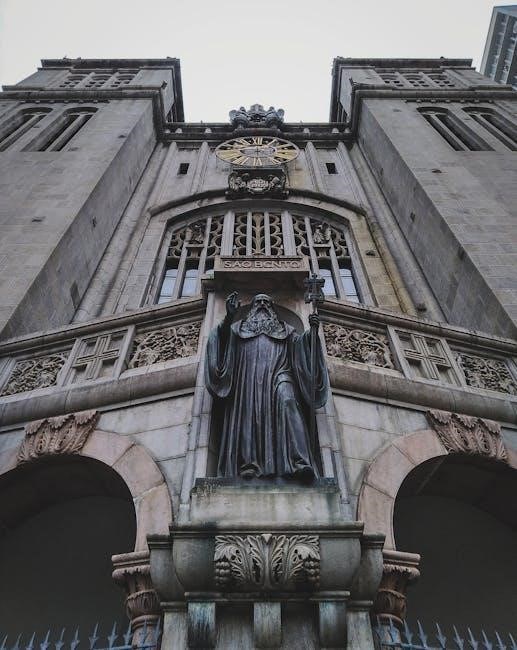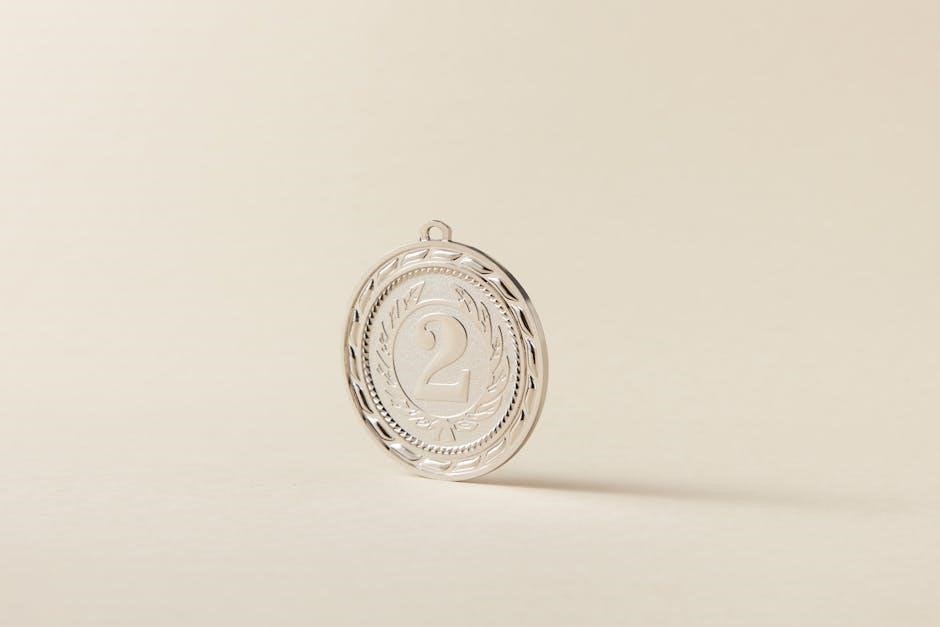
The St. Benedict Medal, powerfully blessed for protection, offers health of soul and body through devout use, as affirmed in traditional blessing prayers and rescripts.
Historical Origins of the Medal
The St. Benedict Medal’s roots trace back to the 6th century and the life of St. Benedict of Nursia, founder of Western monasticism. While not initially a medal, the tradition began with the Pax, a medallion given to followers as a symbol of protection and peace.
Over time, various depictions of St. Benedict and symbolic imagery evolved. The modern medal, as we recognize it today, solidified in the 19th century, largely through the efforts of Bavarian Benedictine monks. They sought a tangible symbol of faith and a safeguard against evil, drawing upon the Rule of St. Benedict and associated blessings.
The medal gained formal recognition with papal approvals and blessings, becoming a popular devotional item for both monastic communities and lay faithful seeking spiritual defense.
The Rule of St. Benedict and its Influence
St. Benedict’s Rule, a foundational text for monastic life, profoundly shaped the medal’s symbolism and associated blessings. The Rule emphasizes a balanced life of prayer, work, and community, fostering spiritual strength and resilience. This pursuit of holiness became intrinsically linked to the medal’s protective qualities.
The emphasis on obedience, humility, and constant prayer within the Rule directly informs the intentions behind the medal’s blessings – seeking divine assistance against temptation and evil. The “pax,” originally a token of peace within the monastery, reflects the Rule’s call for harmonious living.
Ultimately, the medal serves as a constant reminder of the principles outlined in the Rule, encouraging devotion and spiritual growth.
Significance in Catholic Tradition
The St. Benedict Medal holds a revered place within Catholic tradition, deeply rooted in centuries of faith and devotion. Approved by the Church, it’s more than a sacramental; it’s a tangible expression of belief in divine protection. Rescripts from the Sacred Congregation of Religious permit lay Oblates to substitute the medal for the traditional scapular, highlighting its accepted status.
The medal’s blessing, often performed by a priest, invokes God’s power to safeguard the wearer from evil influences and grant health of soul and body. This blessing isn’t merely ceremonial; it’s believed to impart genuine spiritual benefits.
Its continued use demonstrates enduring faith in its efficacy.
The Design and Symbolism of the Medal
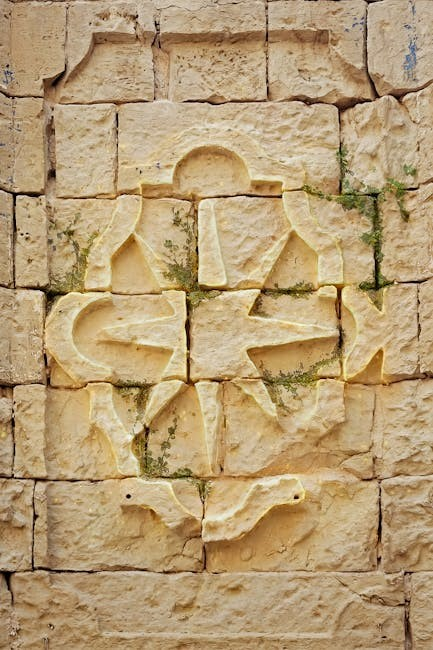
The medal’s design features St. Benedict, a cross, the “Pax” inscription, and letters like C.S.S.M.L., each element carrying profound spiritual meaning and protection.
The Central Image of St. Benedict
The depiction of St. Benedict on the medal is profoundly significant, representing a life dedicated to faith and the establishment of monastic order. He is often shown holding a cross in one hand and the Rule of St. Benedict in the other, symbolizing his devotion to Christ and the guiding principles he established for monastic life. This imagery isn’t merely artistic; it’s a visual invocation of his intercession and the protective power associated with his legacy.
The saint’s presence serves as a constant reminder of the virtues he embodied – humility, obedience, and a commitment to prayer. His image is a focal point for devotion, inviting the wearer to emulate his spiritual journey and seek his blessing. The central positioning emphasizes St. Benedict’s role as a powerful advocate against evil and a source of spiritual strength.
The Cross and the “Pax” Inscription
Dominating the reverse of the medal is a cross, a fundamental symbol of Christian faith and redemption, representing Christ’s sacrifice and victory over sin. Above the cross, the inscription “PAX” – Latin for “Peace” – is prominently displayed. This isn’t simply a wish for tranquility, but a powerful invocation of God’s peace, which surpasses all understanding and protects against spiritual turmoil.
The cross and “PAX” together signify the peace that comes through faith in Christ and the protection offered through St. Benedict’s intercession. This peace is a shield against negative influences and a source of inner strength. The blessing of the medal amplifies this protective power, making it a tangible reminder of God’s loving presence and safeguarding grace.
The Letters Around the Border: C.S.S.M.L.
Encircling the central image on the medal are the letters “C.S.S.M.L.” – an abbreviation of the Latin phrase “Crux Sancta Sit Mihi Lux” (May the Holy Cross be my light). These letters aren’t merely decorative; they represent a profound plea for divine guidance and protection. They invoke the power of the Cross to illuminate one’s path and ward off darkness.
The inclusion of this phrase emphasizes the medal’s purpose as a source of spiritual enlightenment and defense. A blessed medal, particularly one receiving “liberating blessings,” intensifies this effect. The letters serve as a constant reminder of faith and a powerful invocation for God’s grace in navigating life’s challenges, offering solace and strength.
The Depiction of St. Leonard
On the reverse of the medal, St. Leonard is depicted, a 6th-century Frankish monk renowned for his miraculous intercessions, particularly in cases of imprisonment. He’s often shown holding chains, symbolizing his ability to break the bonds of captivity – both physical and spiritual. This imagery highlights the medal’s protective qualities against evil and negative influences.
St. Leonard’s presence signifies liberation and freedom from oppression. A powerfully blessed medal, especially one from Italian Benedictine monasteries, amplifies this aspect. The depiction serves as a visual reminder of hope and divine assistance, offering comfort to those facing difficulties and seeking release from burdens. His intercession is sought through prayer alongside the medal’s blessing.
The Image of St. Maur
Also featured on the reverse is St. Maur, a 9th-century Benedictine monk celebrated for his gift of healing and protection against demonic influence. He is typically portrayed holding a staff, symbolizing his authority over evil and his role as a spiritual guide. His inclusion reinforces the medal’s power as a safeguard against negativity.
St. Maur’s image embodies spiritual strength and the ability to overcome adversity. A blessed medal, particularly one receiving “liberating blessings,” draws upon his intercession. Devout use, coupled with prayer, is believed to enhance its protective effects. The depiction serves as a constant reminder of faith and the availability of divine aid in times of need, offering solace and courage.
Blessing of the St. Benedict Medal
A priest’s blessing is highly recommended, though self-blessing options exist, invoking health of soul and body through fervent prayer and devotion.
The Traditional Blessing Prayer
The traditional blessing prayer, a cornerstone of the medal’s efficacy, invokes the Holy Trinity – Father, Son, and Holy Spirit – and the loving presence of Jesus Christ. This powerful invocation seeks blessings for all who devoutly utilize the medal, specifically requesting health of both soul and body.
The prayer acknowledges Christ’s eventual return as judge, emphasizing the importance of faith and devotion. It’s a plea for divine protection against evil influences and negative energies, aligning with the medal’s historical purpose. Father David emphasizes “Liberating Blessings” are stronger than others, individually applied to each medal. This blessing, combined with the monks’ continuous prayers during medal creation, amplifies its protective power, offering a tangible connection to spiritual grace and safeguarding the wearer on their journey.
The Role of a Priest in Blessing the Medal
A priest’s blessing is highly recommended for maximizing the St. Benedict Medal’s spiritual potency, though self-blessing options exist. The priestly blessing formally channels divine grace, enhancing the medal’s protective qualities and connecting the wearer more deeply to the sacramental life of the Church.
While individuals can utilize devotional prayers for self-blessing, a priest’s authority and sacramental power impart a unique level of efficacy. Many seek this blessing to ensure the medal is fully activated for its intended purpose – safeguarding against evil and promoting spiritual well-being. Father David’s individually applied “Liberating Blessings” demonstrate the power of focused, priestly intention, making a blessed medal a potent symbol of faith and a source of ongoing protection.
Self-Blessing Options and Prayers
While a priest’s blessing is preferred, individuals can also bless their St. Benedict Medal through heartfelt prayer and devotion. Utilizing a prayer focused on seeking God’s protection and invoking St. Benedict’s intercession is a valid practice. A common approach involves reciting prayers like the Lord’s Prayer, Hail Mary, and Glory Be, followed by a specific prayer for the medal’s blessing.
Many resources, including downloadable PDFs, offer suitable prayers for this purpose. The intention behind the self-blessing is crucial; approaching it with reverence and a sincere desire for spiritual safeguarding amplifies its effect. Remember, the medal itself is a sacramental, and devout use, coupled with prayer, strengthens its power to ward off evil and promote well-being.
The Power of Liberating Blessings
Father David emphasizes the unique potency of “LIBERATING BLESSINGS” bestowed upon these St. Benedict Medals, describing them as significantly stronger than standard blessings. These powerful blessings, individually applied to each medal, aim to offer profound protection against negative influences and spiritual attacks. The blessing isn’t merely a ritual; it’s an invocation of divine grace and a shield against evil.

Resources like downloadable PDFs often detail the prayers used in these blessings, though the full extent of their power resides in the priest’s intention and authority. The continuous prayers offered by the Benedictine Monks during the medal’s creation further imbue it with spiritual energy, enhancing the liberating effects of the blessing.
Using the St. Benedict Medal
Devoutly worn on the neck or carried in a pocket, the blessed medal facilitates devotional practices and serves as a constant reminder of faith and protection.
Wearing the Medal for Protection
The St. Benedict Medal is traditionally worn for protection against evil, negative influences, and temptations, stemming from the powerful liberating blessings imparted upon it. Father David emphasizes the medal’s protective qualities, individually blessing each one with these amplified blessings.
Many Catholics choose to wear the medal as a visible sign of their faith and a constant appeal for divine assistance. Whether worn on a chain around the neck, carried in a pocket, or even placed within a home, the medal serves as a tangible reminder of God’s presence and safeguarding power.
The medal’s efficacy isn’t merely in the metal itself, but in the faith of the wearer and the blessings bestowed upon it, particularly those “bigger, stronger” liberating blessings. It’s a sacramental, a sacred sign instituted by the Church, meant to inspire devotion and holiness.
Placement of the Medal (Neck, Pocket, etc.)
The St. Benedict Medal offers flexibility in placement, reflecting personal preference and practical needs. Commonly worn on a chain around the neck, it remains a visible symbol of faith and a constant reminder of protection. Alternatively, carrying the medal in a pocket or purse provides discreet access to its blessings throughout the day.
Some individuals choose to place the medal in their homes, safeguarding a particular room or the entire dwelling. Others incorporate it into devotional spaces, enhancing their prayer environment. Regardless of location, the medal’s power resides in the blessings received, especially the “liberating blessings” from sources like Marys Way Apostolate.
The key isn’t where it’s worn, but the devout intention and faith with which it’s carried, allowing its protective influence to permeate one’s life.
Devotional Practices with the Medal
Devotional practices surrounding the St. Benedict Medal deepen one’s connection to its protective power. Reciting the traditional blessing prayer while holding the medal enhances its efficacy, invoking divine grace and safeguarding against evil influences. Combining medal use with other prayers, like the Lord’s Prayer or Hail Mary, amplifies spiritual strength.
Many incorporate the medal into personal prayer routines, meditating on its symbolism and the life of St. Benedict. Frequent reflection on the medal’s meaning—the cross, the “pax,” and the saint’s image—fosters a stronger faith.
Seeking a priest’s blessing, or utilizing self-blessing options, further activates the medal’s potential, particularly with the powerfully liberating blessings offered by sources like Marys Way Apostolate.
Benefits and Effects of the Medal
The St. Benedict Medal, when devoutly used, bestows protection against evil, promotes health of soul and body, and offers spiritual strength and guidance.
Protection Against Evil and Negative Influences
The St. Benedict Medal is renowned for its potent protective qualities, offering a shield against various forms of evil and negative influences. Blessed with powerful liberating blessings – stronger than standard blessings – these medals serve as a tangible reminder of faith and divine protection.
Originating from a tradition steeped in monastic prayer, particularly within the Benedictine monasteries of Italy where the medals are crafted, each piece is imbued with continual prayer “from the inside out.” This continuous devotion amplifies the medal’s efficacy in warding off harmful energies and spiritual attacks. Devout users experience a sense of security and peace, knowing they are safeguarded by a sacred emblem blessed for their well-being.
Health of Soul and Body
The St. Benedict Medal, through devout use and proper blessing, is believed to bestow health not only upon the body but, crucially, upon the soul. Traditional blessing prayers explicitly invoke this dual benefit, seeking divine grace for complete well-being.
The medal’s power isn’t merely physical; it’s deeply rooted in spiritual fortification. Liberating blessings, individually applied by priests like Father David, amplify this effect, offering a stronger spiritual defense. This holistic approach acknowledges the interconnectedness of spiritual and physical health, recognizing that inner peace and divine grace contribute significantly to overall wellness. Wearing the medal is a constant reminder of faith and a petition for God’s healing touch.
Spiritual Strength and Guidance
The St. Benedict Medal serves as a potent source of spiritual strength, offering guidance and fortitude in navigating life’s challenges. Beyond mere protection, the medal fosters a deeper connection with faith, encouraging reliance on divine providence. The blessings imbued within, particularly the “liberating blessings,” are designed to bolster inner resilience and clarity.
Devout wearers often report a heightened sense of peace and direction, feeling supported in their spiritual journey. The medal’s symbolism—the cross, St. Benedict’s image, and the surrounding inscriptions—acts as a constant reminder of God’s presence and unwavering love, providing comfort and inspiring righteous living. It’s a tangible expression of faith, promoting spiritual growth.
Where to Obtain a Blessed St. Benedict Medal
Blessed medals are available from reputable suppliers like Marys Way Apostolate Store and directly from Italian Benedictine monasteries, in silver or gold plate.
Reputable Suppliers and Online Stores
Finding a genuinely blessed St. Benedict Medal requires careful selection of suppliers. Marys Way Apostolate Store is highlighted as a source for powerfully blessed medals, imported directly from Italy, available in both silver and gold plating, some even adorned with beautiful Swarovski Crystals.
Father David emphasizes the individual, potent “Liberating Blessings” applied to each medal, surpassing standard blessings in strength. The medals themselves benefit from continuous prayer by the Benedictine Monks during their creation, infusing them with spiritual significance from the outset.
When exploring online options, prioritize stores that clearly state the medals are blessed and, ideally, detail the blessing process. Researching the supplier’s reputation and verifying the authenticity of the blessing is crucial for receiving a truly effective sacramental.
Medals from Italy and Benedictine Monasteries
St. Benedict Medals originating from Italy hold particular reverence, as many are crafted within or near Benedictine monasteries. These medals benefit from the constant prayer and devotion of the monks, imbuing them with a unique spiritual power. Marys Way Apostolate Store specifically sources its most powerfully blessed medals from Italy, emphasizing the monks’ continuous prayers during the manufacturing process.
Directly obtaining a medal from a Benedictine monastery ensures authenticity and a strong connection to the Order’s rich tradition. The blessing applied within these sacred spaces is considered especially potent.
When seeking medals from Italy, verifying the source and blessing details is essential to ensure genuine sacramental value and efficacy.
Silver Plated vs. Gold Plated Medals
Both silver and gold plated St. Benedict Medals are readily available, offering options based on personal preference and budget. Marys Way Apostolate Store features both finishes, alongside variations adorned with Swarovski Crystals, enhancing their aesthetic appeal. The material of the medal itself doesn’t diminish the power of the blessing, which is paramount.
The blessing, particularly those described as “LIBERATING BLESSINGS,” applied individually by priests like Father David, are considered more significant than the metal composition.
Ultimately, the devotion of the wearer and the validity of the blessing are the key factors, regardless of whether the medal is silver or gold plated.

The Medal and Lay Oblates of St. Benedict
Lay Oblates of St. Benedict can substitute the traditional small black scapular with the Medal, permitted by a 1965 rescript from the Sacred Congregation of Religious.
Permission to Wear the Medal as a Scapular Substitute
A significant development in the devotional practice surrounding the St. Benedict Medal occurred with official recognition from the Catholic Church. Specifically, a rescript issued on May 4th, 1965, by the Sacred Congregation of Religious granted Lay Oblates of St. Benedict the explicit permission to wear the medal in place of the traditional small black cloth scapular.
This allowance streamlined devotional practice for Oblates, offering a more convenient and readily available means of expressing their commitment. Previously, obtaining and maintaining the scapular presented logistical challenges for some. The medal, being a durable and portable item, provided a practical alternative without diminishing the spiritual significance. This decision underscored the Church’s acknowledgement of the medal’s potent spiritual value and its suitability as a visible sign of Oblate membership and dedication to the Benedictine charism.
Oblate Commitment and the Medal
For Lay Oblates of St. Benedict, the medal transcends a simple sacramental; it embodies a profound commitment to living the Rule of St. Benedict within their daily lives. Wearing the medal signifies a conscious dedication to seeking God through prayer, work, and community, mirroring the monastic ideals.
This commitment isn’t merely symbolic. Oblates strive to integrate Benedictine values – humility, obedience, and stability – into their personal and professional spheres. The medal serves as a constant reminder of this aspiration, fostering a deeper connection to the Benedictine tradition. It’s a visible pledge to continually grow in faith and to offer their lives as a living testament to the Gospel, guided by the wisdom of St. Benedict and strengthened through prayerful devotion.
Modern Relevance of the St. Benedict Medal
Despite modern challenges, devotion to the St. Benedict Medal persists, symbolizing enduring faith and offering a tangible source of protection and spiritual strength.
Continued Devotion in the 21st Century
The St. Benedict Medal maintains a strong presence in the 21st century, resonating with individuals seeking spiritual protection and a deeper connection to their faith. Online resources, like those from Mary’s Way Apostolate Store and Roman Catholic Gear, demonstrate continued accessibility to blessed medals and associated prayers.
This enduring devotion is fueled by the belief in the medal’s power, stemming from the liberating blessings imparted by priests – blessings considered exceptionally potent. The medals, often sourced from Italy and Benedictine monasteries, are seen not merely as religious articles, but as conduits of divine grace.
Furthermore, the medal’s acceptance as a scapular substitute for lay Oblates of St. Benedict, authorized by the Sacred Congregation of Religious, underscores its ongoing significance within the Catholic tradition, ensuring its continued relevance for generations to come.
The Medal as a Symbol of Faith and Protection
The St. Benedict Medal transcends a simple piece of jewelry; it embodies a powerful symbol of faith and a tangible expression of seeking divine protection. Its imagery – St. Benedict, the cross, and the inscription “Pax” – collectively represent a commitment to Christian values and a plea for peace.
The medal’s enduring appeal lies in the belief that it offers safeguarding against evil influences and promotes health of both soul and body, as highlighted in traditional blessing prayers. The individually blessed medals, particularly those from sources like Mary’s Way Apostolate, are considered especially potent.
Ultimately, wearing the medal serves as a constant reminder of one’s faith and a visible declaration of trust in God’s protective power, offering spiritual strength and guidance in daily life.