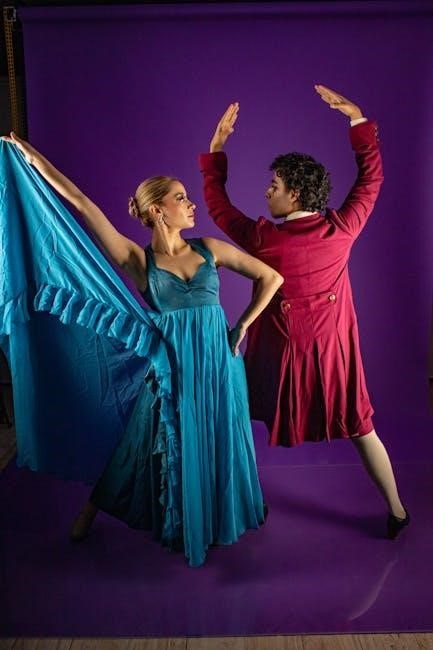
A Gentleman’s Guide to Love and Murder: A Comprehensive Overview
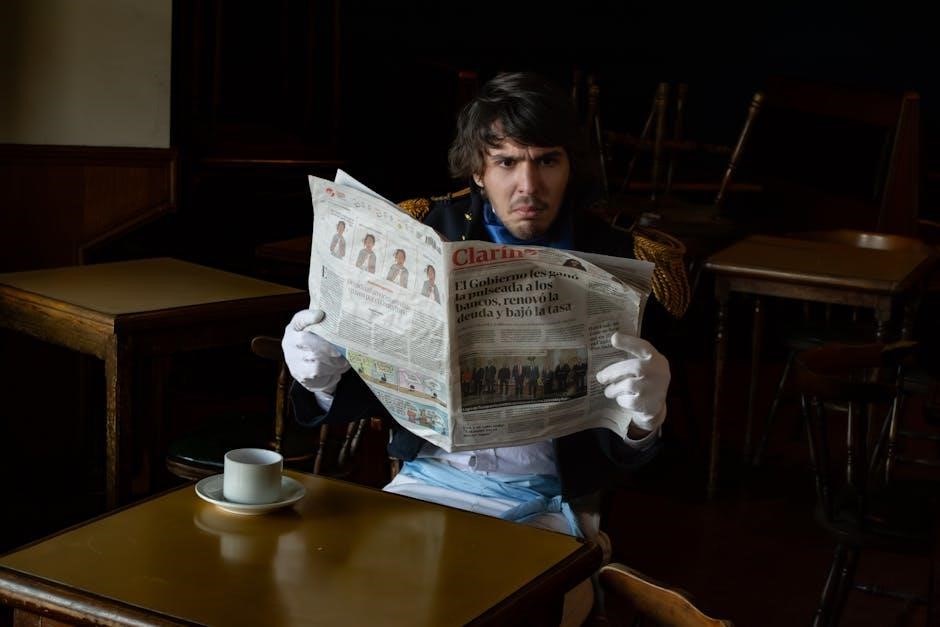
A Gentleman’s Guide to Love and Murder‚ a Tony Award-winning musical‚ delightfully blends comedic timing with a darkly humorous plot‚ captivating audiences worldwide with its charm.
Origins and Inspiration
A Gentleman’s Guide to Love and Murder finds its roots in the 1906 novel Israel Rank: The Autobiography of a Criminal by Roy Horniman. This Victorian-era tale‚ a darkly comedic narrative‚ provided the foundational storyline for the musical adaptation. However‚ the musical significantly departs from the novel’s serious tone‚ embracing a farcical and lighthearted approach.
The musical’s creators‚ Robert L. Freedman (book and lyrics) and Steven Lutvak (music and lyrics)‚ were inspired by the classic British comedies‚ particularly those of Noël Coward and Gilbert & Sullivan. They aimed to create a show that celebrated wit‚ wordplay‚ and theatricality. The concept of one actor portraying all eight of the D’Ysquith family members was a key element from the beginning‚ adding a unique and challenging dimension to the production. The initial spark came from a suggestion to adapt a lesser-known work‚ leading them to Horniman’s novel and ultimately‚ a Broadway triumph.
The Plot: A Dastardly Inheritance
The narrative of A Gentleman’s Guide to Love and Murder centers around Monty Navarro‚ a distant relative of the wealthy D’Ysquith family. Upon learning he is the last living heir‚ Monty embarks on a hilariously dark quest to secure his inheritance. However‚ eight members of the D’Ysquith family stand in his way‚ and Monty‚ driven by ambition and a touch of desperation‚ decides the most efficient solution is…elimination.
The plot unfolds as a series of increasingly elaborate and comedic murders‚ all meticulously planned and executed by Monty. He skillfully disguises himself to commit each crime‚ cleverly avoiding suspicion. Intertwined with this murderous pursuit is a blossoming romance with Sibella Hallward‚ a beautiful and opportunistic woman‚ and a more tender connection with Phoebe D’Ysquith‚ a kind and compassionate member of the family he’s attempting to dismantle. The musical cleverly balances the dark humor of the murders with the romantic entanglements‚ creating a delightfully twisted tale.
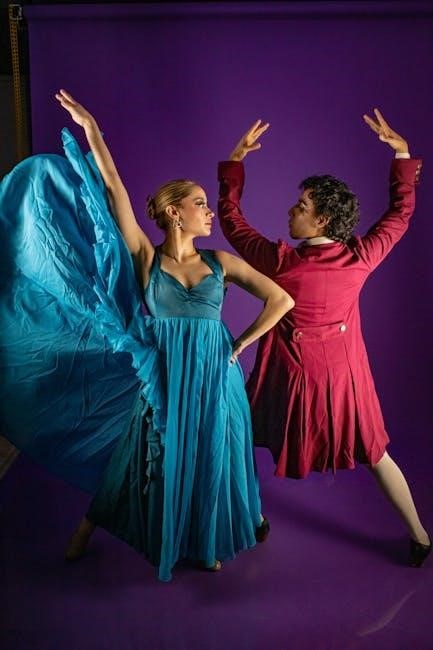
Key Characters
Monty Navarro‚ portrayed with charm and cunning‚ is the ambitious protagonist driven by a desire to escape his impoverished life and claim his rightful inheritance. The D’Ysquith Family‚ a collection of eccentric and often unpleasant relatives‚ serve as the obstacles – and victims – in Monty’s path. Each member possesses a distinct personality‚ contributing to the comedic chaos.
Sibella Hallward is a captivating and pragmatic woman who becomes Monty’s romantic interest‚ motivated by wealth and social status. Her relationship with Monty is a complex mix of affection and opportunism. Conversely‚ Phoebe D’Ysquith represents a more genuine connection for Monty‚ offering kindness and a moral compass amidst his dark deeds. These four characters form the core of the story‚ driving the plot forward with their interwoven desires and conflicts.
Monty Navarro
Monty Navarro is the central figure‚ a distant heir to the D’Ysquith fortune‚ initially dismissed and overlooked due to his humble origins. Driven by a yearning for a better life‚ he embarks on a darkly comedic quest to systematically eliminate the eight relatives standing between him and his inheritance. Portrayed as both charming and ruthless‚ Monty’s character is a fascinating study in ambition and desperation.
His journey is marked by quick wit‚ elaborate disguises‚ and a surprising degree of success in his murderous endeavors. Throughout the musical‚ Monty navigates complex romantic entanglements with both Sibella Hallward and Phoebe D’Ysquith‚ adding layers to his already intricate character. He embodies the play’s central theme of social climbing and the lengths one will go to achieve it.
The D’Ysquith Family
The D’Ysquith family represents the epitome of British aristocracy – eccentric‚ entitled‚ and utterly oblivious to the schemes unfolding around them. This sprawling family‚ consisting of eight potential heirs‚ serves as the primary obstacle to Monty Navarro’s ambitions. Each member is a caricature of upper-class mannerisms‚ possessing distinct personalities and quirks that contribute to the musical’s comedic brilliance.
From the pompous and self-absorbed to the utterly ridiculous‚ the D’Ysquiths are portrayed with affectionate satire. Their collective presence highlights the absurdity of inherited wealth and social status. The actors portraying multiple D’Ysquith family members demonstrate remarkable skill‚ seamlessly transitioning between characters with quick changes and comedic timing‚ adding to the show’s energetic pace.
Sibella Hallward
Sibella Hallward is a captivating and independent woman who becomes Monty Navarro’s primary love interest‚ and a crucial component of his elaborate scheme. She’s portrayed as a spirited and ambitious socialite‚ initially drawn to Monty’s newfound wealth and potential. However‚ their relationship is far from simple‚ marked by a playful dynamic of attraction and manipulation.
Sibella isn’t merely a romantic foil; she’s a shrewd observer‚ often aware of Monty’s machinations yet willingly participating in the game. Her character embodies a blend of charm and cunning‚ making her a compelling presence on stage. Colleen McLaughlin’s portrayal of Sibella brought a vibrant energy to the role‚ showcasing both her vulnerability and her strength.
Phoebe D’Ysquith
Phoebe D’Ysquith represents a contrasting romantic interest for Monty Navarro‚ embodying Victorian propriety and intellectual curiosity. Unlike the vivacious Sibella‚ Phoebe is reserved and somewhat eccentric‚ fascinated by ornithology and possessing a quiet strength. She serves as a moral counterpoint to Monty’s increasingly desperate actions‚ offering a glimpse of genuine connection amidst the deception.
Phoebe’s character provides comedic relief through her unconventional interests and unwavering dedication to her studies. Rhiannon Legg’s performance highlighted Phoebe’s endearing awkwardness and subtle wit. While initially appearing as an unlikely match for Monty‚ their interactions reveal a shared vulnerability and a potential for authentic affection‚ complicating his murderous pursuit of the D’Ysquith inheritance.
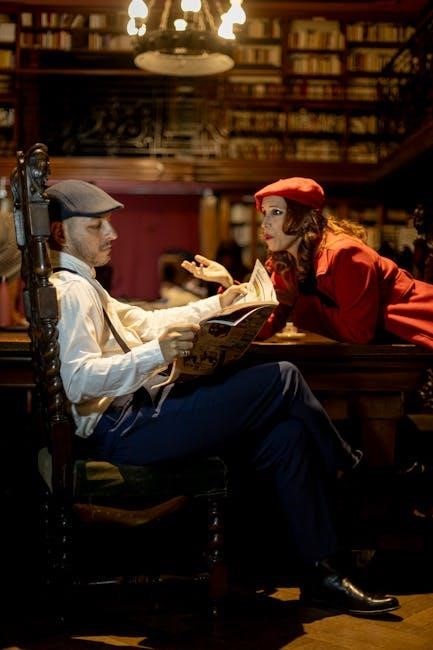
Musical Numbers & Their Significance
The musical’s songs propel the narrative‚ blending witty lyrics with memorable melodies‚ enhancing the comedic timing and emotional depth of Monty’s audacious scheme.
“A Gentleman’s Guide” ー Opening Number
The opening number‚ “A Gentleman’s Guide‚” immediately establishes the musical’s tone – a fast-paced‚ witty‚ and slightly macabre introduction to the D’Ysquith family and the premise of the story. It serves as an expositional tour-de-force‚ rapidly introducing the extensive family tree and highlighting the vast fortune at stake.
Through clever lyrics and energetic choreography‚ the song sets the stage for Monty Navarro’s desperate attempt to claim his inheritance. The ensemble’s performance is crucial‚ portraying the various D’Ysquith relatives with distinct personalities and quirks. It’s a brilliant showcase of the show’s comedic style and the actor playing Monty’s versatility‚ as he embodies each family member in quick succession. The number effectively grabs the audience’s attention and promises a delightfully chaotic journey ahead‚ setting the pace for the entire musical.

“I’ve Decided to Marry You” ⎯ Romantic Duet
“I’ve Decided to Marry You” is a pivotal romantic duet between Monty Navarro and Sibella Hallward‚ showcasing a playful and unconventional courtship. Unlike traditional love songs‚ this number is characterized by its rapid-fire lyrics and comedic timing‚ reflecting the characters’ pragmatic approach to love and their shared ambition.
The song cleverly reveals their mutual self-interest – Monty seeks a connection to the D’Ysquith family‚ while Sibella desires financial security – yet manages to convey genuine affection amidst the scheming. The duet’s quick tempo and intricate wordplay demand precise delivery from both performers‚ highlighting their chemistry and comedic skills. It’s a delightful subversion of the typical romantic ballad‚ perfectly encapsulating the musical’s unique blend of humor and heart.
“The Family Tree” ⎯ A Comedic Highlight
“The Family Tree” stands as a signature comedic highlight within A Gentleman’s Guide to Love and Murder‚ brilliantly showcasing Monty Navarro’s increasingly frantic attempts to eliminate the D’Ysquith heirs. The number is a masterclass in physical comedy and quick character changes‚ as a single actor portrays all eight members of the unfortunate family‚ each meeting a uniquely absurd demise.
The song’s structure mimics a genealogical recitation‚ but quickly devolves into a series of increasingly elaborate and hilarious deaths – from accidental falls to unfortunate encounters with various objects. The actor’s seamless transitions between characters‚ coupled with the orchestra’s playful accompaniment‚ create a whirlwind of comedic energy. It’s a testament to the show’s clever writing and the performer’s exceptional talent‚ solidifying its place as a fan favorite.

Production History & Awards
A Gentleman’s Guide premiered in 2013‚ enjoying a successful Broadway run and garnering widespread acclaim for its inventive staging and witty storytelling.
Broadway Run & Critical Reception
A Gentleman’s Guide to Love and Murder began previews on November 21‚ 2013‚ at the Walter Kerr Theatre on Broadway‚ officially opening on December 7‚ 2013. The production enjoyed a remarkably successful run‚ playing over 1‚500 performances and closing on January 17‚ 2016.
Critical reception was overwhelmingly positive‚ with reviewers praising the show’s clever book by Robert L. Freedman‚ the charming music and lyrics by Steven Lutvak‚ and the brilliant performance of the actor playing all eight D’Ysquith relatives. Critics lauded the show’s inventive staging‚ quick-change artistry‚ and overall comedic brilliance.
The musical quickly became a popular choice for regional theaters and school productions‚ solidifying its place as a modern musical theatre classic. Its unique premise and engaging score resonated with audiences and critics alike‚ establishing it as a standout production on Broadway.
Tony Award Wins (2014)
A Gentleman’s Guide to Love and Murder was a major triumph at the 68th Tony Awards in 2014‚ securing four prestigious awards. The musical won the coveted Tony Award for Best Musical‚ recognizing its overall excellence in storytelling‚ music‚ and performance.
Additionally‚ it received awards for Best Book of a Musical‚ honoring Robert L. Freedman’s witty and ingenious script. Steven Lutvak and Frederic Ahlsyn jointly won the Tony for Best Music and Lyrics‚ acknowledging their delightful and memorable score. Finally‚ Jefferson Mays received a Tony Award for Best Performance by an Actor in a Leading Role in a Musical‚ for his astonishing portrayal of all eight D’Ysquith family members.
These wins cemented the show’s status as a critical and commercial success‚ demonstrating its broad appeal and artistic merit within the Broadway community.
Regional and International Productions
Following its successful Broadway run‚ A Gentleman’s Guide to Love and Murder quickly gained popularity with regional theatres across the United States‚ proving its adaptability and enduring appeal. Numerous productions blossomed‚ showcasing the musical’s accessibility for diverse communities and theatre companies.
The show’s licensing rights became highly sought after‚ leading to performances in various states‚ from community theatres to professional regional houses. Beyond the US‚ the musical has also enjoyed international acclaim‚ with productions staged in countries like the United Kingdom and Australia.
These international adaptations often featured local casts and creative teams‚ demonstrating the musical’s universal themes and comedic brilliance resonating with audiences globally‚ solidifying its place as a modern classic.
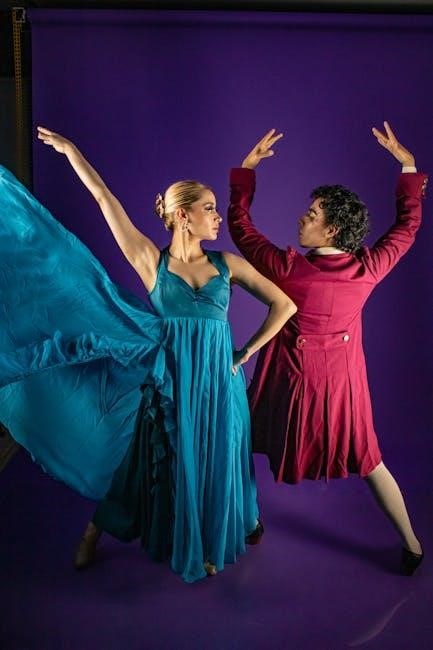
Themes Explored in the Musical
A Gentleman’s Guide masterfully explores themes of social satire‚ greed‚ ambition‚ and deception‚ all wrapped within a comedic narrative of love and calculated murder.
Social Satire & Class Commentary
A Gentleman’s Guide to Love and Murder delivers a sharp and witty social satire‚ meticulously dissecting the rigid class structures of Victorian England. The musical cleverly lampoons the aristocracy‚ exposing their eccentricities‚ entitlement‚ and the absurdity of inherited wealth. Monty Navarro’s desperate climb up the family tree highlights the societal obsession with lineage and status‚ showcasing how far someone will go to attain acceptance and fortune.
The D’Ysquith family‚ with their numerous and peculiar members‚ embodies the decadence and detachment of the upper class. Their oblivious reactions to Monty’s increasingly obvious attempts at eliminating them underscore the musical’s commentary on their self-importance and lack of genuine connection. Through exaggerated characters and farcical situations‚ the production critiques the inequalities inherent in a system built on birthright rather than merit‚ offering a humorous yet pointed reflection on societal norms.
Greed and Ambition
A Gentleman’s Guide to Love and Murder profoundly explores the corrosive nature of greed and unchecked ambition‚ primarily through the protagonist‚ Monty Navarro. Driven by a desire to escape his impoverished background and claim the D’Ysquith inheritance‚ Monty embarks on a ruthless path‚ demonstrating how far one will go when consumed by avarice. His escalating acts of murder aren’t portrayed as inherently evil‚ but rather as calculated steps in a desperate pursuit of wealth and social standing.
The musical subtly questions the morality of ambition‚ presenting it as a powerful force capable of justifying even the most heinous acts. The D’Ysquith family‚ themselves beneficiaries of inherited fortune‚ represent the ultimate object of Monty’s desire‚ highlighting the allure of a life of privilege. Ultimately‚ the play suggests that the relentless pursuit of material gain can lead to moral compromise and self-destruction‚ leaving a trail of consequences in its wake.
Love‚ Deception‚ and Murder

A Gentleman’s Guide to Love and Murder masterfully intertwines the themes of love‚ deception‚ and‚ of course‚ murder‚ creating a darkly comedic narrative. Monty Navarro’s pursuit of both the D’Ysquith fortune and romantic fulfillment drives the plot‚ showcasing how easily love can become entangled with manipulative schemes. His relationships with Sibella Hallward and Phoebe D’Ysquith are built on layers of deceit‚ as he juggles affections while simultaneously plotting the demise of her family.
The musical cleverly uses murder not as a gruesome spectacle‚ but as a farcical element‚ highlighting the absurdity of Monty’s actions. Deception is paramount‚ with Monty constantly adopting disguises and fabricating stories to conceal his true intentions. The interplay between these three elements – love‚ deception‚ and murder – forms the core of the show’s comedic brilliance and its exploration of human flaws.
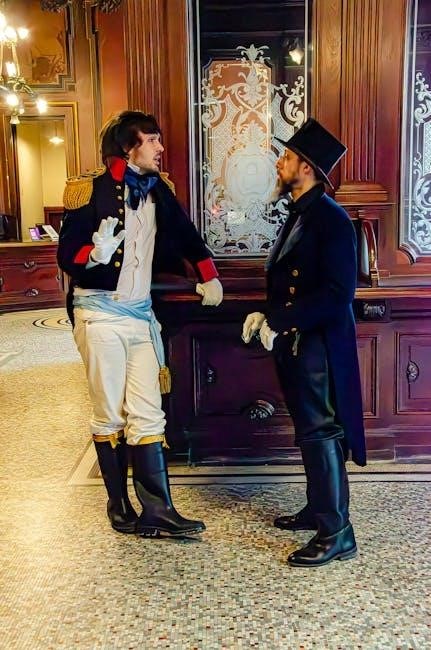
Staging and Performance Style
A Gentleman’s Guide employs minimalist set designs‚ relying heavily on quick costume changes and exceptional ensemble work to portray multiple characters effectively.
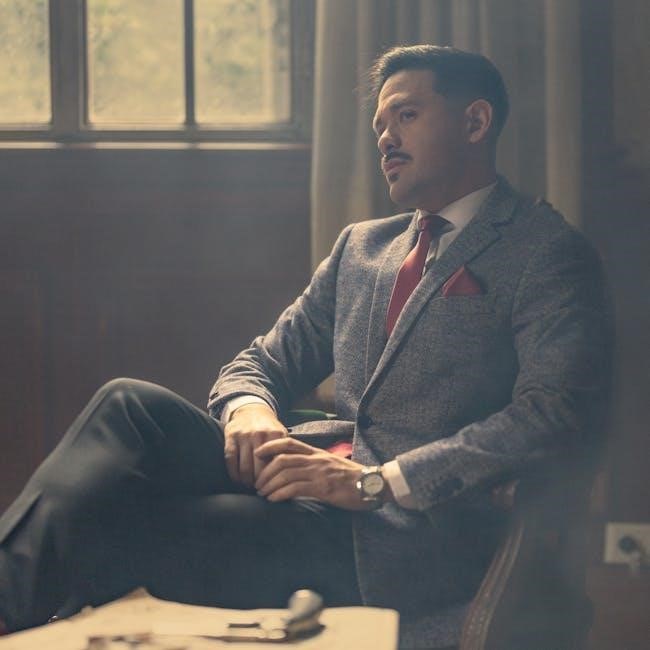
Minimalist Set Design
The production of A Gentleman’s Guide to Love and Murder distinguishes itself through a remarkably clever and economical set design. Rather than elaborate‚ detailed backdrops‚ the staging relies on a relatively bare stage‚ utilizing a few key pieces of furniture and scenic elements that are swiftly rearranged to suggest various locations. This minimalist approach isn’t a limitation‚ but rather a deliberate stylistic choice that enhances the show’s comedic pacing and focuses attention on the performers and the narrative.
The design cleverly uses projections and props to establish settings‚ allowing the audience to actively participate in imagining the grand estates and varied locales. This simplicity also facilitates the incredibly fast-paced scene changes crucial to the plot‚ keeping the energy high and the story moving. The focus remains firmly on the characters and their increasingly absurd schemes‚ rather than being distracted by opulent scenery.
Quick Changes and Ensemble Work
A Gentleman’s Guide to Love and Murder is renowned for its exceptional ensemble work and breathtakingly swift costume changes. A single actor‚ playing all eight of the D’Ysquith family members‚ demands incredible skill and precision. These rapid transformations are a core element of the show’s comedic effect‚ relying on meticulously planned choreography and backstage coordination;
The ensemble doesn’t merely support the lead; they actively drive the narrative‚ seamlessly transitioning between characters and locations. Their ability to embody multiple roles with distinct personalities is crucial to the play’s success. The quick changes aren’t simply technical feats‚ but integral parts of the storytelling‚ amplifying the humor and highlighting the absurdity of Monty’s predicament. This demands a highly versatile and talented cast‚ working in perfect synchronicity.