
This manual details the D16Y8 transmission, crucial for Honda enthusiasts․ Understanding its nuances, especially regarding compatibility and identification, is paramount for successful swaps and repairs․
Overview of the D16Y8 Engine and Transmission
The D16Y8 engine, found in various Honda Civic models, is often paired with a specific transmission․ This transmission is a key component influencing the vehicle’s performance characteristics, particularly acceleration and fuel efficiency․ Australian forums highlight a common confusion: Honda Australia often lists parts interchangeably between the VTI coupe and sedan, leading to potential mismatches when sourcing replacements․
Identifying the correct transmission is vital, as variations exist – notably the A000 and B000 castings – impacting gear ratios and final drive․ These differences, though subtle, can significantly alter the driving experience․ Understanding this interplay between the D16Y8 engine and its corresponding transmission is the foundation for any maintenance, repair, or swap project․
Importance of a Detailed Manual
A comprehensive manual is indispensable when working with the D16Y8 transmission․ The online community frequently encounters issues with parts identification, particularly distinguishing between D16Y8 and D16Y5 transmissions, and understanding casting codes like A000 and B000․ Incorrect parts can lead to performance problems or failed swaps․
Detailed instructions are crucial for successful installation, removal, and troubleshooting․ Forums reveal common problems like transmission failure to shift, often requiring extensive research and potentially a transmission swap․ A manual streamlines these processes, minimizing errors and ensuring compatibility, especially when considering swaps with D16Y7 engines or transmissions․ Accurate guidance saves time, money, and frustration․

Identifying the D16Y8 Transmission
Proper identification relies on casting stamps (A000/B000) and understanding gear ratios․ Distinguishing it from the D16Y5 is vital, as parts are often incorrectly interchanged․
Casting Stamps: A000 vs․ B000
Decoding the transmission’s casting stamp is fundamental for accurate identification․ The stamps, either A000 or B000, indicate distinct gear ratios and final drive configurations․ A000 signifies a longer gear ratio and final drive, generally suited for highway cruising and fuel efficiency․ Conversely, B000 denotes a shorter ratio, enhancing acceleration but potentially sacrificing top-end speed and economy․
However, a critical caveat exists: the D16Y5 transmission also utilizes the B000 designation․ This creates ambiguity, making visual inspection alone unreliable․ Therefore, confirming the origin and intended application is crucial․ Any S20 gearbox bearing the B000 stamp will indeed possess the shorter gear ratios, but verifying the initial engine pairing remains essential for accurate assessment․
Understanding Gear Ratios and Final Drive
Gear ratios and final drive significantly impact the D16Y8’s performance characteristics․ Shorter gear ratios (like those found with the B000 stamp) provide quicker acceleration by multiplying engine torque, ideal for responsive driving․ However, this often comes at the cost of higher engine RPMs at cruising speeds, potentially reducing fuel efficiency․
Longer ratios (A000) prioritize fuel economy and comfortable highway driving, offering lower RPMs at speed․ The final drive ratio further influences overall gearing․ A numerically higher final drive yields quicker acceleration, while a lower ratio favors higher top speeds and improved fuel consumption․ Understanding these relationships is vital when considering transmission swaps or modifications to tailor the vehicle’s performance to specific needs․
Distinguishing D16Y8 from D16Y5 Transmissions
Identifying the difference between D16Y8 and D16Y5 transmissions can be surprisingly complex․ While often assumed to be interchangeable, subtle variations exist, particularly in Australia where Honda’s parts designation can be inconsistent․ The primary method involves checking casting stamps – A000 indicates longer gear ratios, while B000 signifies shorter ones․
However, a significant caveat exists: the D16Y5 transmission also frequently carries the B000 designation, creating confusion․ Therefore, relying solely on the stamp isn’t foolproof․ Thorough research and potentially comparing internal components are sometimes necessary for definitive identification․ Any S20 gearbox with a B000 stamp will have shorter gears, offering a degree of certainty․
Compatibility and Swapping
Successful D16Y8 transmission swaps require careful consideration․ Compatibility with D16Y7 engines is possible, but manual-to-manual swaps are strongly recommended for simplicity․
D16Y8 Transmission with D16Y7 Engine Compatibility
Pairing a D16Y8 transmission with a D16Y7 engine is a frequently discussed modification within the Honda community․ While generally feasible, it’s crucial to understand the implications․ The D16Y8 offers different gear ratios compared to the D16Y7’s original transmission, potentially altering the vehicle’s acceleration and top speed characteristics․
Online forums, like ClubCivic․com, confirm this compatibility, specifically when transitioning from a manual D16Y7 to a manual D16Y8․ However, attempting to combine a manual transmission with a previously automatic setup introduces significant complexity and is generally discouraged․ The D16Y8’s gearing can provide a sportier feel, but careful consideration of driving style and intended use is essential before undertaking this swap․
Swapping with D16Y7 Transmission: Considerations
Considering a swap to a D16Y7 transmission from a D16Y8 setup often arises due to cost or availability․ Many users on the Honda forums report acquiring D16Y7 engine and transmission combinations affordably․ However, understand that you’re essentially reverting to the original gearing of the D16Y7, potentially losing the performance benefits of the D16Y8’s ratios․
The primary reason for this swap is typically addressing a failing D16Y8 transmission․ It’s vital to ensure the D16Y7 transmission is in good working order before installation․ Remember, a direct swap is only recommended between manual transmissions; attempting an auto-to-manual conversion is significantly more involved․ Thoroughly research compatibility and potential issues before proceeding with this modification․
Manual to Manual Swaps: Essential Requirements
Successfully swapping D16Y8 transmissions necessitates a strictly manual-to-manual approach․ Attempting to combine a manual transmission with an engine originally paired with an automatic is a complex undertaking, far exceeding a simple swap․ Key requirements include ensuring both the engine and transmission share the same mounting points and flywheel compatibility․
Furthermore, the clutch disc, pressure plate, and throw-out bearing must be correctly matched to both the engine and transmission․ Pay close attention to the input shaft spline count and diameter․ Verify the driveshaft length remains appropriate after the swap to avoid vibrations or damage․ Proper alignment is crucial; misaligned components can lead to premature wear and failure․
Installation and Removal
Proper D16Y8 transmission work demands specific tools and a methodical approach․ Careful removal and installation procedures are vital to prevent damage and ensure correct operation․
Tools Required for Transmission Removal
Successfully removing a D16Y8 transmission necessitates a comprehensive toolkit․ Essential items include a variety of socket wrenches (8mm, 10mm, 12mm, 14mm, 17mm), extensions, and a ratchet․ A torque wrench is crucial for re-installation, ensuring proper bolt tightening․ You’ll also need penetrating oil to loosen stubborn bolts, and potentially a breaker bar for extra leverage․
Supporting the engine with an engine support bar is highly recommended, preventing damage during transmission separation․ A transmission jack is almost mandatory for safe lowering and positioning․ Don’t forget safety glasses and gloves! Additionally, having a drain pan ready for fluid removal is vital․ A pry bar can assist in gently separating the transmission from the engine, and various screwdrivers will be useful for disconnecting linkages and sensors․
Step-by-Step Transmission Removal Procedure
Begin by disconnecting the battery and draining the transmission fluid․ Support the engine securely with an engine support bar․ Detach all shift linkages, the speedometer cable, and any electrical connectors․ Remove the starter and any associated brackets․ Next, disconnect the axles from the transmission, being careful not to damage the seals․
Support the transmission with a transmission jack․ Unbolt the transmission from the engine block, starting with the upper bolts․ Gently pry the transmission away from the engine, ensuring it’s fully supported by the jack․ Slowly lower the transmission, carefully maneuvering it out from under the vehicle․ Inspect all mounting points and hardware for damage before proceeding․
Step-by-Step Transmission Installation Procedure
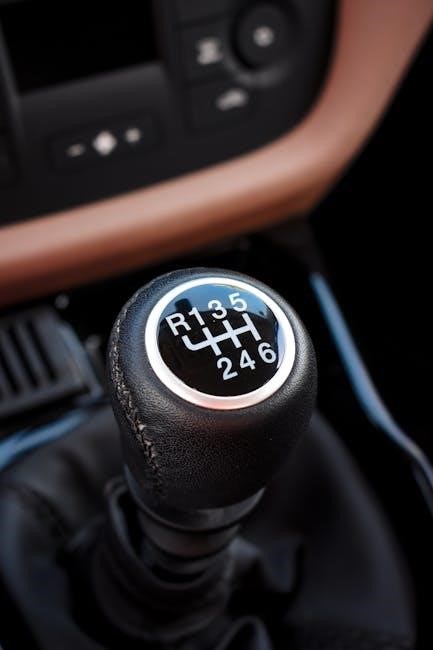
Position the transmission using a transmission jack, carefully aligning it with the engine block․ Gently raise the transmission until it’s flush against the engine․ Install the upper mounting bolts, tightening them by hand initially․ Then, install the lower bolts and fully torque all bolts to the manufacturer’s specifications․
Reconnect the axles, ensuring they are fully seated in the transmission․ Reattach the starter, shift linkages, speedometer cable, and all electrical connectors․ Fill the transmission with the recommended fluid type․ Finally, reconnect the battery and verify proper operation of all gears․ Double-check all connections and fluid levels before a test drive․
Troubleshooting Common Issues
Addressing shifting problems and gear ratio concerns is vital․ Compatibility issues during swaps, often linked to casting stamps, require careful diagnosis and correction․
Transmission Not Shifting: Potential Causes
Several factors can contribute to a D16Y8 transmission failing to shift properly․ Internal damage within the gearbox itself is a primary suspect, potentially stemming from worn synchronizers or damaged gears․ Low or contaminated transmission fluid significantly impacts performance, hindering smooth engagement․
External issues, like a faulty clutch master or slave cylinder (for manual transmissions), can prevent proper disengagement, mimicking a transmission problem․ Linkage adjustments are also crucial; incorrect settings can obstruct gear selection․ Electrical faults, though less common, could affect solenoid operation in some cases․
Thoroughly investigate fluid levels and condition before delving into more complex diagnostics․ Remember, a failing automatic transmission, as noted in forum discussions, might necessitate a complete replacement․
Identifying and Addressing Gear Ratio Problems
Gear ratio discrepancies in a D16Y8 transmission manifest as undesirable performance characteristics․ A “too short” ratio results in quick acceleration but lower top speed, while a “too long” ratio offers the opposite․ Identifying the ratio requires locating the casting stamp – ‘A000’ signifies longer ratios, ‘B000’ shorter․ However, be aware that D16Y5 transmissions can also carry the B000 designation, complicating identification․
Addressing ratio issues often involves transmission swapping․ Online forums highlight the importance of verifying the final drive when selecting a replacement․ Ensure compatibility with your engine (D16Y7 or Y8) to avoid further complications․ Incorrect ratios can negatively impact fuel economy and overall drivability․
Careful research and accurate identification are key to resolving gear ratio problems․
Dealing with Compatibility Issues During Swaps
Compatibility concerns frequently arise during D16Y8 transmission swaps, particularly when pairing with a D16Y7 engine․ While generally feasible, ensuring a manual-to-manual swap is crucial; auto-to-manual conversions are significantly more complex․ Online resources, like ClubCivic, confirm this compatibility, but emphasize careful consideration․
A common issue stems from inaccurate parts identification․ Wreckers often rely on Honda’s potentially misleading categorization, leading to receiving a D16Y5 transmission instead of a D16Y8․ Always verify casting stamps (A000 or B000) to confirm the correct gear ratios․
Thorough research on forums like Ozhonda and D-Series․org is vital to avoid unforeseen problems during the swap process․
Maintenance and Repair
Regular fluid changes and meticulous inspections are vital for D16Y8 transmission longevity․ Addressing wear and damage promptly prevents costly repairs and ensures optimal performance․
Recommended Fluid Type and Change Intervals
Maintaining the correct fluid level and type is paramount for the D16Y8 transmission’s health․ Honda recommends using a high-quality manual transmission fluid, specifically designed for their vehicles․ While specific fluid weights aren’t explicitly detailed in the provided sources, consulting a Honda service manual or a reputable parts supplier is crucial for accurate specification․
Regarding change intervals, a general guideline suggests changing the fluid every 30,000 to 60,000 miles, or approximately every two to three years, depending on driving conditions․ More frequent changes are advisable for aggressive driving, track use, or heavily modified vehicles․ Regularly inspecting the fluid’s condition – looking for discoloration or metallic particles – can help determine if an earlier change is necessary․ Neglecting fluid maintenance can lead to premature wear and eventual transmission failure․
Inspecting for Wear and Damage
Thorough inspection is vital when assessing a D16Y8 transmission’s condition․ Begin by checking for external leaks around the seals and casing․ Internal wear can manifest as unusual noises during shifting – grinding, whining, or clunking sounds warrant immediate attention․ Examine the shift linkage for looseness or damage, impacting precise gear engagement;
Upon disassembly (if performed), inspect the gears for chipped teeth, pitting, or excessive wear․ Check the synchronizers for proper function and wear patterns․ Bearings should rotate smoothly without play or roughness․ Look for metal shavings in the fluid, indicating internal component failure․ Careful observation during inspection can prevent catastrophic failures and guide necessary repair or replacement decisions, ensuring long-term transmission reliability․
Common Repair Procedures for D16Y8 Transmissions
Addressing D16Y8 transmission issues often involves specific procedures․ Synchronizer replacement is frequent, requiring careful disassembly and precise installation․ Worn seals are easily replaced, preventing fluid leaks and maintaining proper lubrication․ Gear replacement, though more complex, is necessary for damaged teeth or excessive wear․ Bearing replacement ensures smooth operation and prevents further damage․
Shift fork inspection and replacement are crucial for accurate gear engagement․ Thorough cleaning of all components during reassembly is essential․ Always use the correct fluid type and torque specifications․ Proper alignment and adjustment of the shift linkage are vital for smooth shifting․ These procedures, performed correctly, restore the transmission’s functionality and extend its lifespan․
Resources and Further Information
Explore online forums like Ozhonda, ClubCivic, and Honda D Series for valuable insights․ D-Series․org and HTArchive․org offer extensive technical resources and support․
Online Forums and Communities (Ozhonda, ClubCivic, Honda D Series Forum)
Engaging with online communities is invaluable when working with the D16Y8 transmission․ Ozhonda Forums, specifically, highlight discrepancies in Australian Honda parts labeling, noting that wreckers often follow Honda Australia’s potentially inaccurate designations – a D16Y8 gearbox might actually be a D16Y5․ ClubCivic․com provides discussions on compatibility, confirming D16Y8 transmissions can fit D16Y7 engines in manual-to-manual swaps․
The Honda D Series Forum offers troubleshooting advice and real-world experiences; These platforms allow users to share knowledge, identify casting stamps (like A000 or B000), and discuss gear ratio differences․ Active participation can save time and prevent costly mistakes during swaps or repairs, offering a collective wisdom beyond any single manual․
D-Series․org Transmission Alley
D-Series․org’s Transmission Alley is a dedicated resource for D16Y8 transmission information․ It’s frequently referenced by enthusiasts tackling swaps, offering detailed threads on compatibility between different D-series engines and transmissions․ Discussions confirm the feasibility of swapping a D16Y8 transmission with a D16Y7 engine, but emphasize the necessity of a manual-to-manual exchange․
The forum provides a space to decipher casting stamps – A000 indicating longer gear ratios, and B000 signifying shorter ones – though cautions that the B000 designation appears on both D16Y8 and D16Y5 transmissions․ This resource is crucial for verifying gear ratios and ensuring the correct transmission is sourced for a specific application, avoiding performance mismatches․
HTArchive․org Resources
HTArchive․org hosts valuable archived discussions regarding the D16Y8 transmission, offering insights from experienced Honda enthusiasts․ These threads frequently address the complexities of identifying transmissions, particularly differentiating between D16Y8 and D16Y5 models, as Australian sources suggest Honda’s parts designations can be misleading․
The archive confirms the importance of examining casting stamps (A000 for longer ratios, B000 for shorter) but acknowledges the overlap with the D16Y5, complicating identification․ Discussions also highlight successful D16Y8 and D16Y7 engine/transmission combinations, reinforcing the manual-to-manual swap requirement for optimal results and avoiding significant modifications․